

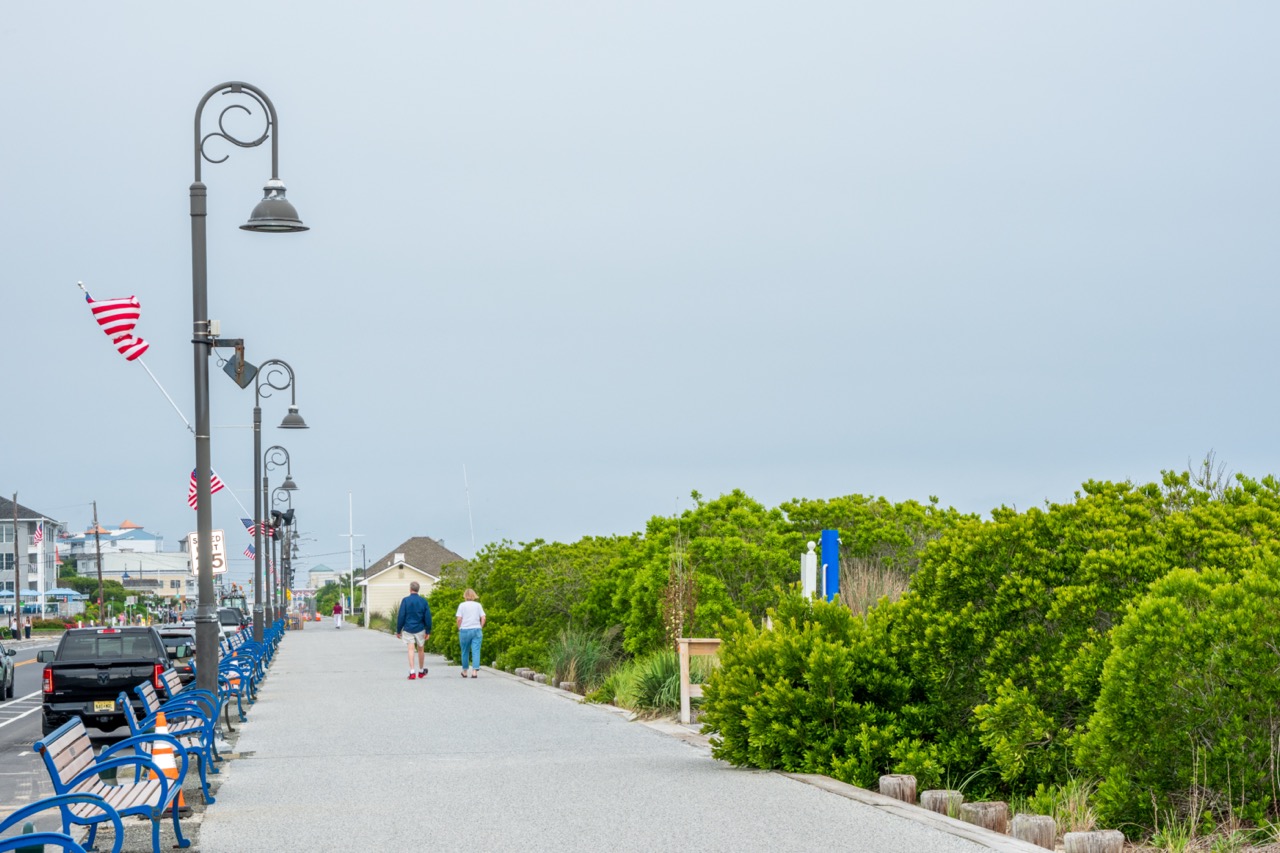
A historic boardwalk and promenade along Cape May’s oceanfront
Contents7 sections
The Cape May Boardwalk is a scenic oceanfront promenade located at the southern tip of New Jersey. Unlike traditional boardwalks with rides and arcades, this stretch is quiet, residential, and historic.
The boardwalk runs alongside wide beaches, Victorian homes, and public access points. It connects key areas such as Beach Avenue, the Cape May Convention Hall, and multiple guarded beaches during the summer season.
Known for walking, jogging, and ocean views, the boardwalk reflects Cape May’s character as a historic seaside town rather than an amusement destination.
Where the Cape May boardwalk is located
The Cape May Boardwalk is located along Beach Avenue in Cape May City, at the southern end of New Jersey. It stretches through a primarily residential and historic area, running parallel to the Atlantic Ocean and connecting several of the city’s most recognizable beachfront locations.
Unlike continuous commercial boardwalks found farther north, this promenade follows the natural curve of the shoreline. The northern portion begins near the Cape May Welcome Center and Convention Hall, where public restrooms, event space, and beach access are concentrated.
From there, the boardwalk continues south past historic hotels, bed-and-breakfasts, and beach entrances before tapering off near the Cove, close to Cape May Point.
Its location places visitors within walking distance of downtown Cape May , including shops, dining, and lodging clustered around Washington Street Mall. Many travelers use the boardwalk as a walking route between beaches and town amenities, especially during summer months when traffic and parking are limited.
• Runs along Beach Avenue within Cape May City • Located in Cape May County at the southern tip of the state • Links the Convention Hall area with residential beach blocks • Ends near the Cove, close to Cape May Point • Walkable connection to downtown Cape May • Surrounded by historic districts and preserved architecture
What makes the Cape May boardwalk different
The Cape May boardwalk stands apart from most New Jersey shore boardwalks due to its residential scale and historic setting. There are no amusement rides, arcades, or loud attractions.
The experience is defined by open ocean views on one side and preserved Victorian homes on the other, creating a setting that feels more like a seaside promenade than an entertainment strip.
This character reflects Cape May’s long-standing focus on preservation and walkability. The boardwalk is commonly used for morning walks, jogging, and casual strolling rather than all-day activity.
Early hours are especially popular, with locals and visitors using the wide wooden path for exercise before beaches become busy. Evenings bring quieter foot traffic and unobstructed sunset views along the shoreline.
Another defining difference is how the boardwalk integrates into daily movement around town. It functions as a practical walking route between beaches, lodging, and downtown rather than a destination filled with attractions.
Visitors staying near Beach Avenue often rely on it as a primary way to move through the area without driving.
• No rides, arcades, or commercial piers • Quiet, walk-focused design • Historic homes line the inland side • Popular for jogging and sunrise walks • Limited vendors compared to other NJ boardwalks • Feels integrated into daily town life
Beaches along the Cape May boardwalk
Beaches along the Cape May Boardwalk are known for their width, natural dunes, and organized access points. The shoreline follows a gentle curve, creating long sightlines and consistent wave conditions that appeal to swimmers and walkers alike. Unlike narrower beaches farther north, these stretches allow for comfortable spacing even during peak summer weeks.
Public beach entrances appear every few blocks, most clearly marked by signage and dune crossings. During the guarded season, typically from late June through early September, lifeguards are stationed at designated beaches during daytime hours. Flag systems are used to indicate swimming conditions, which can vary due to tides and weather patterns along the southern coast.
Beach tags are required during the summer season and are checked regularly at access points. Tags can be purchased daily, weekly, or seasonally, with sales locations near the Convention Hall and other central areas. Outside of the guarded season, beaches remain open for walking and recreation, though services are limited.
Amenities are concentrated near the Convention Hall area, where restrooms, outdoor showers, and changing facilities are located. Chair and umbrella rentals are also more common in this section. South toward the Cove, beaches become less developed and quieter, attracting visitors looking for fewer crowds and open views toward Cape May Point.
• Wide, sandy beaches with gradual slopes • Guarded swimming areas in summer • Beach tags required during peak season • Access points every few blocks • Amenities near Convention Hall • Quieter beaches closer to the Cove
Best time to visit the Cape May boardwalk
The Cape May boardwalk can be visited year-round, but the experience changes significantly by season. Summer is the most active period, with full beach services, lifeguards, and the highest number of visitors. From late June through August, daytime temperatures are warm, ocean conditions are monitored, and the boardwalk serves as a primary walking route between beaches and nearby lodging.
Late spring and early fall are often considered the most comfortable times for walking. May and September bring milder temperatures, lighter crowds, and easier parking. These shoulder seasons are especially popular for morning walks and extended strolls, as the boardwalk remains accessible while beach services begin to scale back. Weather can shift quickly during these months, with cooler mornings and stronger coastal winds.
Winter offers a quieter and more exposed experience. While the boardwalk remains open, most amenities are closed, and conditions can be cold and windy. These months appeal mainly to off-season visitors and local walkers rather than beachgoers.
• Summer offers full services and guarded beaches • Spring and fall provide lighter crowds • Early mornings are cooler and quieter • Winter is open but weather dependent • Parking is easier outside peak summer • Events may increase weekend foot traffic
Parking and access near the Cape May boardwalk
Parking near the Cape May boardwalk is primarily street based, with most access occurring along Beach Avenue and adjacent residential streets. Metered parking is common in oceanfront blocks, especially near the Convention Hall and central beach entrances. Rates and enforcement are seasonal, with stricter limits in place during summer months and on weekends.
Municipal parking lots are available within walking distance of the boardwalk, particularly near the Convention Hall and toward the northern end of town. These lots tend to fill quickly during peak summer days, often by mid-morning. Visitors staying overnight frequently rely on walking or biking once parked, as traffic congestion along Beach Avenue can be heavy during peak hours.
Biking is a common way to reach the boardwalk, with relatively flat streets and designated bike racks near major beach entrances. Early mornings offer the easiest access for both parking and cycling. Pedestrian access from downtown is straightforward, with clearly marked crossings leading from Washington Street Mall toward the oceanfront.
Parking rules, seasonal rates, and neighborhood restrictions can change throughout the year.
• Metered parking along Beach Avenue • Municipal lots near Convention Hall • Seasonal enforcement and rate changes • Heavy traffic on summer weekends • Bike racks near beach entrances • Walkable access from downtown
Conclusion
The Cape May boardwalk offers a coastal experience shaped by history, walkability, and open ocean views rather than commercial attractions. Its location along Beach Avenue places it between wide, guarded beaches and one of New Jersey’s best preserved seaside towns, making it a natural extension of daily movement rather than a standalone destination.
Seasonal changes strongly influence how the boardwalk is used. Summer brings full beach operations and steady foot traffic, while spring and fall provide quieter conditions suited for longer walks and sightseeing. Even in winter, the boardwalk remains accessible for those seeking unobstructed shoreline views and minimal crowds.
As part of the broader Cape May shoreline, the boardwalk connects beaches, lodging, and downtown amenities in a way that supports car-free movement once in town.
FAQ about Cape May boardwalk
What is the Cape May boardwalk known for?
The Cape May boardwalk is known for its quiet, residential setting and historic surroundings rather than amusement attractions. Located along Beach Avenue in Cape May City, it offers ocean views, access to wide beaches, and proximity to preserved Victorian neighborhoods in Cape May County.
How long is the Cape May boardwalk?
The Cape May boardwalk stretches for several blocks along Beach Avenue, running from the Convention Hall area toward the Cove near Cape May Point. While shorter than commercial boardwalks farther north, it connects multiple beach entrances and residential sections of the shoreline.
Are there rides or arcades on the Cape May boardwalk?
There are no rides, arcades, or entertainment piers on the Cape May boardwalk. The design reflects Cape May’s historic character, focusing on walking, jogging, and scenic views rather than commercial attractions common in other New Jersey shore towns.
Are beach tags required near the Cape May boardwalk?
Beach tags are required during the summer season, typically from late spring through early fall. Tags are checked at access points along Beach Avenue and can be purchased near the Convention Hall or other designated locations in Cape May City.
When is the best time to walk the Cape May boardwalk?
Early mornings in summer offer cooler temperatures and lighter crowds. Spring and fall are popular for longer walks due to mild weather and reduced foot traffic. Winter walks are possible but depend on wind and temperature conditions along the southern New Jersey coast.
Is parking available near the Cape May boardwalk?
Parking is available through metered street spaces along Beach Avenue and nearby municipal lots. During peak summer weekends, parking fills quickly, especially near the Convention Hall. Many visitors park once and walk between beaches and downtown Cape May.
Can bicycles be used near the Cape May boardwalk?
Bicycles are commonly used on nearby streets, with bike racks located near beach entrances. Riding directly on the boardwalk may be restricted during busy summer hours. Flat terrain throughout Cape May City makes cycling a practical option outside peak times.
Are the beaches along the Cape May boardwalk guarded?
Beaches along the boardwalk are guarded during the summer season, generally from late June through early September. Lifeguards are stationed at designated beaches, with flags indicating swimming conditions based on weather and ocean activity.
How close is downtown Cape May to the boardwalk?
Downtown Cape May, centered around Washington Street Mall, is within walking distance of the boardwalk. Many streets provide direct pedestrian access, allowing visitors to move between shops, dining, and beaches without driving during the busy season.
Does the Cape May boardwalk stay open year-round?
The boardwalk remains open year-round, though services vary by season. Summer offers full beach operations, while fall and spring are quieter. In winter, amenities are limited, but the walkway remains accessible for oceanfront walks.
Jersey Shore, in your inbox
One email a week: new rentals, price drops and what is on at the shore.
No spam, unsubscribe anytime.
Rentals in Cape May
See all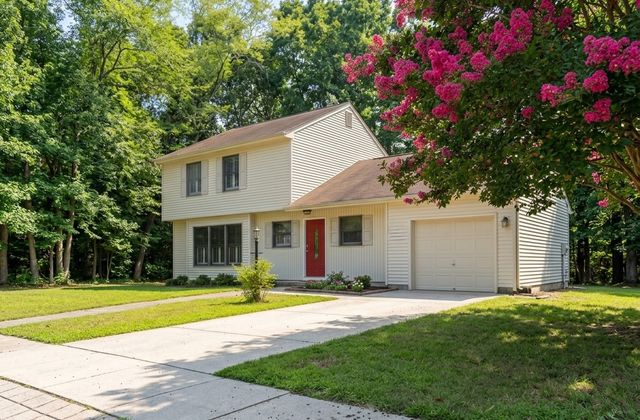
Home in Cape May

Apartment in Cape May
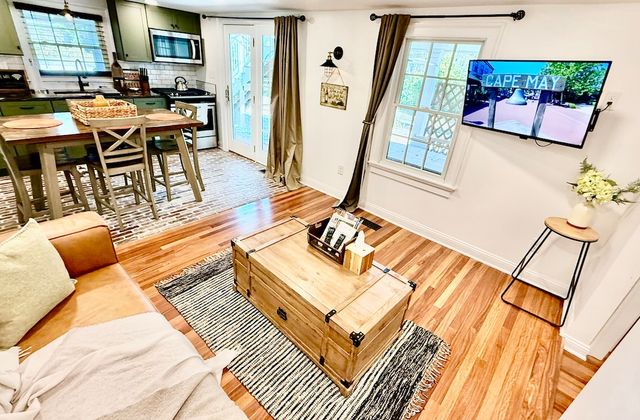
Apartment in Cape May

Apartment in Cape May

Apartment in Cape May
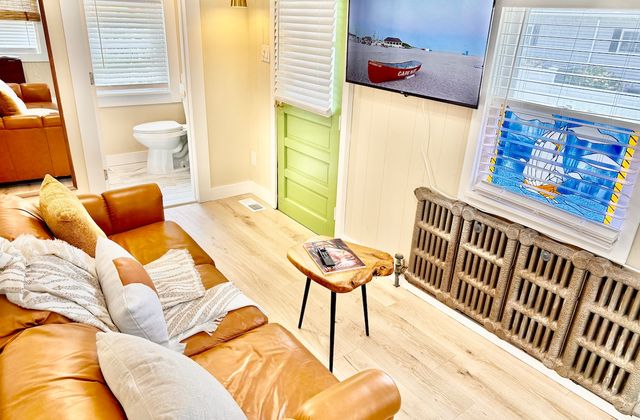
Apartment in Cape May
Apartment in Cape May

Home in Cape May

Apartment in Cape May